$500 a head

What this Easter's record lamb prices say about tradition, land, and the real cost of the food on your table.
MEANING BEFORE MONEY
Lamb has meant something long before it meant dinner.
In Christian tradition, the lamb is the symbol of sacrifice and renewal. It carries the weight of centuries: the Lamb of God, the Passover offering, the idea that something precious is given so that something else can begin. You don't need to be religious to feel the gravity of that.
In Australia, lamb at Easter is just what you do. It's the Sunday roast at Mum's table. The smell of it slow-cooking all morning. The argument over who gets the cutlets. It's ritual layered over ritual. In regional Victoria especially, where farming runs in families for generations, lamb at Easter isn't a menu choice. It's a calendar event.
I say this not to be sentimental. I say it because the price conversation that's coming has a lot more to it than dollars and cents.
THIS YEAR FEELS DIFFERENT
I've done enough public speaking to know how to read a room. And this Easter, the room feels different.
Customers are double-checking the price tag before they put things in their basket. People who've never asked me about pricing are asking. A few have walked out to "think about it", which, as any butcher knows, usually means they went to the supermarket.
There's a disconnect between what people expect lamb to cost at Easter and what it actually costs right now. That gap is real, it's wide, and it's worth explaining properly.
THE HEADLINE REALITY
Heavy lambs hit $500 per head at the Ballarat saleyards this week. That's a new national record.
Let that land for a second. Five hundred dollars. For one lamb.
To put it in perspective: the previous national record of $495 per head was set just a fortnight ago at Griffith in New South Wales. That record lasted about two weeks. These weren't your average lambs, but they were broadly in line with where the market is right now, around $11 per kilogram dressed weight. That's what makes it significant. It's not just one outlier pen. It's the whole market running hot.
Lamb prices have hit a new all-time high trading range of $11 to $13 per kilogram dressed weight nationally. That's the benchmark. That's the number processors are paying, and that's what flows through to the retail counter.
WHAT'S DRIVING IT
The Australian sheep flock has been bleeding for years. Successive dry seasons, difficult breeding conditions, and critically, heavy flock liquidation as producers sold ewes they couldn't afford to feed. When you sell your ewes, you're not just selling today's income. You're selling the next three to five years of lambs.
That bill is now due.
Sheep and lamb slaughter is running about 24% below last year. There simply aren't as many finished lambs coming onto the market. The ones that are there are carrying premium value because demand from domestic consumers, processors, and export markets hasn't dropped to match.
Europe is buying more Australian lamb. Asia is buying more. And here at home, Easter demand is spiking right into a supply trough. The timing couldn't be worse for the consumer.
What made it even tighter is that a lot of this year's lambs went to restockers and feedlotters earlier in the season rather than straight to processors. Producers got good money for young stock and took it. Smart farming. But it means finished lambs ready for slaughter are genuinely sparse right now.
WHAT PEOPLE GET WRONG
"But aren't there more sheep in Australia now? Isn't supply recovering?"
Yes and no. The national flock is starting to rebuild. Rainfall has helped. But there's a timing mismatch in agriculture that most people don't see from the outside.
You can't just turn sheep production on like a tap. A ewe lamb born this spring won't produce her first lamb until next year at the earliest. Restockers buying young lambs today are investing in 2027's supply, not this Easter's. The pipeline is loooooong.
More supply "in the system" doesn't mean more finished product available to the processor this week. The two things are very different. Right now, slaughter numbers are still well down year-on-year, and Easter is tomorrow on the farming calendar.
BEHIND THE COUNTER
My conversations with suppliers have been blunt lately. They're not apologising for the prices. They can't. They're paying more for stock than they ever have, and they're passing that reality along the chain.
My buying decisions are tighter than usual. I'm being more deliberate about what I bring in, what quantities I commit to, and what I think my customers can actually absorb. There's a real margin squeeze between what the product costs me and what feels fair to charge a family doing their Easter shop on a budget.
The emotional side of this is real too. Lamb at Easter isn't a luxury item in most people's heads. It's a ritual. Asking someone to pay what the market now demands for a leg of lamb feels like we're asking them to reconsider a tradition. That's uncomfortable.
But the price is the price. And the price right now reflects years of supply-side pressure colliding with a cultural moment of peak demand.
WHAT IT MEANS THIS EASTER
Some families will still buy the leg of lamb. They'll pay it, maybe grumble a little, and it'll be worth it because it's Easter and that's what you do.
Some families are switching proteins. I'm seeing more interest in pork shoulder, whole chickens, rolled beef roasts. Things that deliver the same Sunday roast energy at a lower price point. There's no shame in that. A good slow-cooked pork shoulder fed with care is a meal worth making.
And some families, honestly, are treating lamb as the premium it now is. Buying a smaller cut. A rack instead of a full leg. Making it special rather than standard. That's not a bad thing. It might actually be a more honest relationship with where the food comes from and what it takes to produce it.
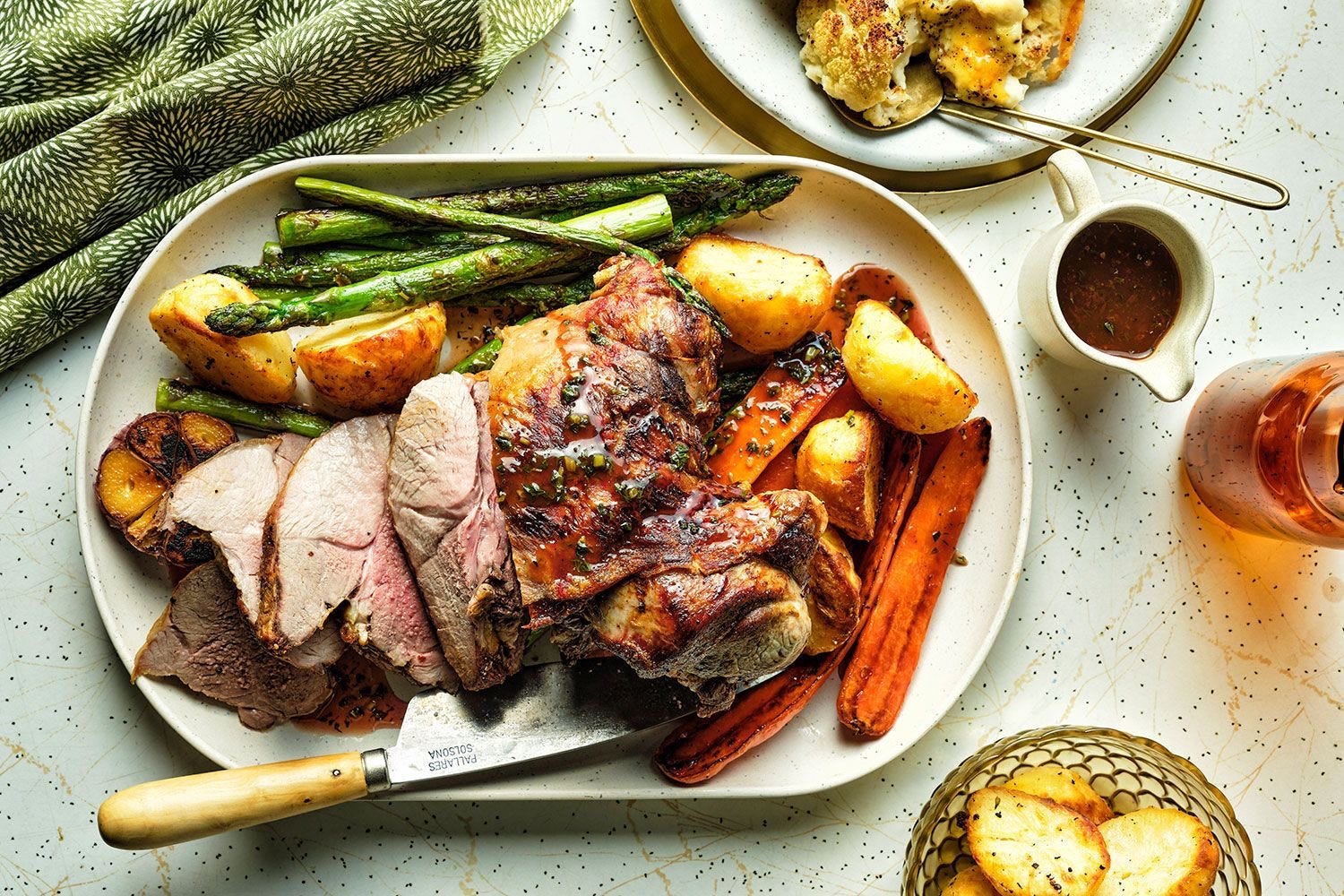
Food isn't just price. It's meaning, timing, and supply reality. All arriving at the same moment.
Lamb this Easter sits at the intersection of all three. The meaning is ancient. The timing is what it is. And the supply reality is the result of years of drought, flock decisions, and a global market that wants Australian sheepmeat as much as we do.
What I keep coming back to is this: the farmers who bred those record-breaking $500 lambs in Ballarat didn't get rich overnight. They went through years of tough seasons to get to this point. The price at the counter carries that story. It carries the land.
Whether you're buying a leg of lamb this Easter or cooking something different this year, I hope the meal is good. I hope the table is full.
And if you do put a lamb on, know that it meant something long before it meant dinner.
Joel the Butcher | 3J's Butchers, Gippsland VIC
Market data sourced from Mecardo, MLA, and Australian saleyard reports, week ending 28 March 2026.